
Twelve hours on your feet and your ankles start to look like someone else’s. Compression socks help, but the boxes throw numbers at you: 8 to 15, 15 to 20, 20 to 30 mmHg. The quick answer: pick 15 to 20 mmHg if you are new to compression, your legs are tired and a bit puffy by the end of a shift, or you just want to feel better at hour ten. Pick 20 to 30 mmHg only if 15 to 20 has not done enough and you have checked with your doctor first.
The number is the squeeze, measured in millimeters of mercury, the same unit as blood pressure. Graduated socks squeeze hardest at the ankle and ease off up the calf, which helps push fluid back up instead of letting it pool around your shoes.
The short version
5 picks- 01 15 to 20, best all-rounder Sockwell Circulator Graduated Compression Socks $32.95 Amazon
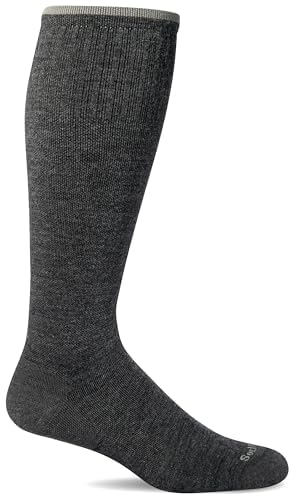
- 01 15 to 20, best all-rounder Sockwell Circulator Graduated Compression Socks Amazon UK
- 02 15 to 20, budget multipack CHARMKING Compression Socks (multipack) $9.99 Amazon

- 02 15 to 20, budget multipack CHARMKING Compression Socks (multipack) Amazon UK
- 03 15 to 20, sized by calf SIGVARIS Merino Wellbeing Compression Socks $43.56 Amazon

- 04 Light, cotton DANISH ENDURANCE Organic Cotton Compression Socks $29.70 Amazon

- 04 Light, cotton DANISH ENDURANCE Organic Cotton Compression Socks Amazon UK
- 05 20 to 30, firm Physix Gear Compression Socks $18.82 Amazon

- 05 20 to 30, firm Physix Gear Compression Socks Amazon UK
Side by side
| Light (under 15 mmHg) | 15 to 20 mmHg | 20 to 30 mmHg | |
|---|---|---|---|
| Pressure | Gentle | Moderate | Firm |
| Feel | Barely there, like a snug sock | A noticeable but comfortable hug | A real squeeze, harder to pull on |
| Check with a doctor first? | If you have diabetes, neuropathy, artery disease or circulation problems | Same | Yes, everyone, before wearing them |
| Best for | Trying compression, mild tiredness | Most people on long shifts | Heavier swelling that 15 to 20 does not touch |
What the research found
A 2021 study followed 40 security guards working 12 hour shifts mostly standing. Some wore regular socks, some wore 15 to 20 mmHg stockings, and some wore 20 to 30 mmHg. Lower leg volume went up in the regular sock group and not in either stocking group, and the regular sock group reported more leg and foot discomfort. The researchers found no clear winner between the two compression levels, and noted the 15 to 20 mmHg socks were easier to put on.
That is a small study of healthy men, not nurses, so do not treat it as the final word. But it lines up with common sense: start with the lighter level, and only go firmer if you need to. A separate 2022 trial in workers with leg swelling after long standing found compression stockings stopped the swelling from building during the workday, though they did not stop leg pain from creeping up. So socks are one tool, not the whole fix: breaks, good shoes and putting your feet up after work still count.
The 15 to 20 mmHg picks
Sockwell Circulator
Moderate graduated compression in a soft merino wool blend, with patterns that do not look medical. Merino handles sweaty feet better than most synthetics, which matters by hour eleven.
Sockwell Circulator Graduated Compression Socks
Compression that feels like a nice sock.
Moderate graduated compression in a soft merino and bamboo blend, with patterns that do not look medical.
- Compression
- 15 to 20 mmHg graduated
- Fiber
- Merino wool blend
- Height
- Knee high
Best for
First-time compression wearers and anyone who runs hot or gets sweaty feet.
Worth knowing
Pricier per pair than multipacks. Wash cold and air dry to keep the squeeze.
CHARMKING multipack
Bright multipacks at a price that lets you wear a fresh pair every shift. They are thinner and wear out sooner than premium pairs, but they are the cheapest way to find out if compression works for you.
CHARMKING Compression Socks (multipack)
A week of compression for the price of one fancy pair.
Light graduated compression in bright multipacks, so you can wear a fresh pair every shift.
- Compression
- 15 to 20 mmHg
- Pack
- Multiple pairs
- Height
- Knee high
Best for
Trying compression cheaply, and stocking a full week.
Worth knowing
Thinner and less durable than premium pairs. Sizing is broad, so check the chart.
SIGVARIS Merino Wellbeing
From a long-established compression hosiery maker, sized by ankle and calf rather than shoe size alone. If your calves never fit one size fits most packs, measure and order these.
SIGVARIS Merino Wellbeing Compression Socks
Compression hosiery know-how in a sock you would actually wear.
A merino wool knee-high from a long-established compression hosiery maker, with graduated 15 to 20 mmHg pressure and sizing by ankle and calf rather than shoe size alone.
- Compression
- 15 to 20 mmHg graduated
- Fiber
- Merino wool blend
- Sizing
- By ankle and calf measurement
Best for
Anyone ready to spend more on fewer, better pairs, and people whose calves fall outside one-size-fits-most packs.
Worth knowing
Costs several times a multipack per pair. Measure your ankle and calf against the size chart before ordering.
The light option
DANISH ENDURANCE organic cotton
A lighter squeeze than most 15 to 20 socks, in a cotton-rich knit. Good if sporty synthetic socks feel too hot or slippery, or if you want to ease in. If your legs swell a lot, it may not be enough. For a fun patterned pack as a gift, the Laite Hebe set in our compression socks guide is the cheerful option.
DANISH ENDURANCE Organic Cotton Compression Socks
Gentle compression for people who hate the feel of nylon.
A cotton-rich knee-high with light graduated compression, sold in multipacks and marketed for people who stand or sit for long hours.
- Compression
- Light, under 20 mmHg graduated
- Fiber
- Organic cotton blend
- Height
- Knee high
Best for
New starters easing into compression, and anyone who finds sporty synthetic socks too slippery or too hot.
Worth knowing
A lighter squeeze than most 15 to 20 mmHg socks, so it may not be enough if your legs swell a lot. The fit is snug, so measure your calf first.
The 20 to 30 mmHg pick
Physix Gear
A firmer graduated sock with a reinforced heel and toe, sized by shoe size and calf. This is for legs that still swell late in a shift after you have given 15 to 20 a fair try. Please check with your doctor before you start wearing this level.
Physix Gear Compression Socks
Firmer squeeze for legs that swell by hour eight.
A firmer graduated compression sock with a reinforced heel and toe, sold in plain colors and sizes by calf width.
- Compression
- 20 to 30 mmHg graduated
- Height
- Knee high
- Sizing
- By shoe size and calf
Best for
Legs that ache or swell late in a shift, when lighter socks do not do enough.
Worth knowing
20 to 30 mmHg is firm. If you have a circulation problem, diabetes or nerve damage, ask your doctor before wearing it.
Who should check with a doctor first
Anything firmer than 20 mmHg, ask your doctor first. And if you have diabetes, neuropathy (nerve damage), peripheral artery disease, or any problem with your circulation, talk to your doctor before wearing compression at any level. The NHS notes compression stockings are not suitable for people with blood flow problems in their arteries, because a squeeze that helps healthy veins can harm legs that already struggle to get enough blood. MedlinePlus also says your provider should choose the pressure level when compression is prescribed for a medical reason.
Which should you buy?
- First time trying compression: 15 to 20 mmHg. Sockwell for comfort, CHARMKING to test cheaply.
- Three 12s a week on med-surg, ED or ICU: 15 to 20 mmHg, enough pairs for every shift.
- Hot unit or sweaty feet: merino, so Sockwell or SIGVARIS.
- Calves bigger or smaller than average: SIGVARIS, sized by measurement.
- Legs still swelling after a few weeks of 15 to 20: talk to your doctor about 20 to 30.
- Pregnant: ask your OB or midwife before choosing a level.
- A known circulation condition: your doctor picks the level, not a sock box.
What to skip
- Socks with no mmHg number. If the pressure is not listed, you have no idea what you are buying.
- Jumping straight to 20 to 30 because firmer sounds better. It is not, for most people.
- 30 mmHg and up off the shelf. That is prescription territory.
- Wearing them to bed unless a doctor has told you to.
- Hot dryers. Heat kills the stretch. Wash cold and air dry.
When should I put them on?
MedlinePlus suggests putting compression stockings on in the morning when your legs are least swollen. For a day shift, that means before you leave the house. They should feel snug, firmest at the ankle, with no bunching or wrinkles.
Do I need knee high or thigh high?
For long shifts, knee high. Swelling from standing mostly gathers around the ankles and lower legs. Pair them with the right shoes (see the shoe guide) and scrubs that fit (see Cherokee vs Grey’s Anatomy vs Carhartt). Sorting the rest of your kit? Try Classic III vs Cardiology IV, Littmann vs MDF and the pocket kit guide.
Your unit’s own dress code and occupational health advice come first, so check them before you buy.